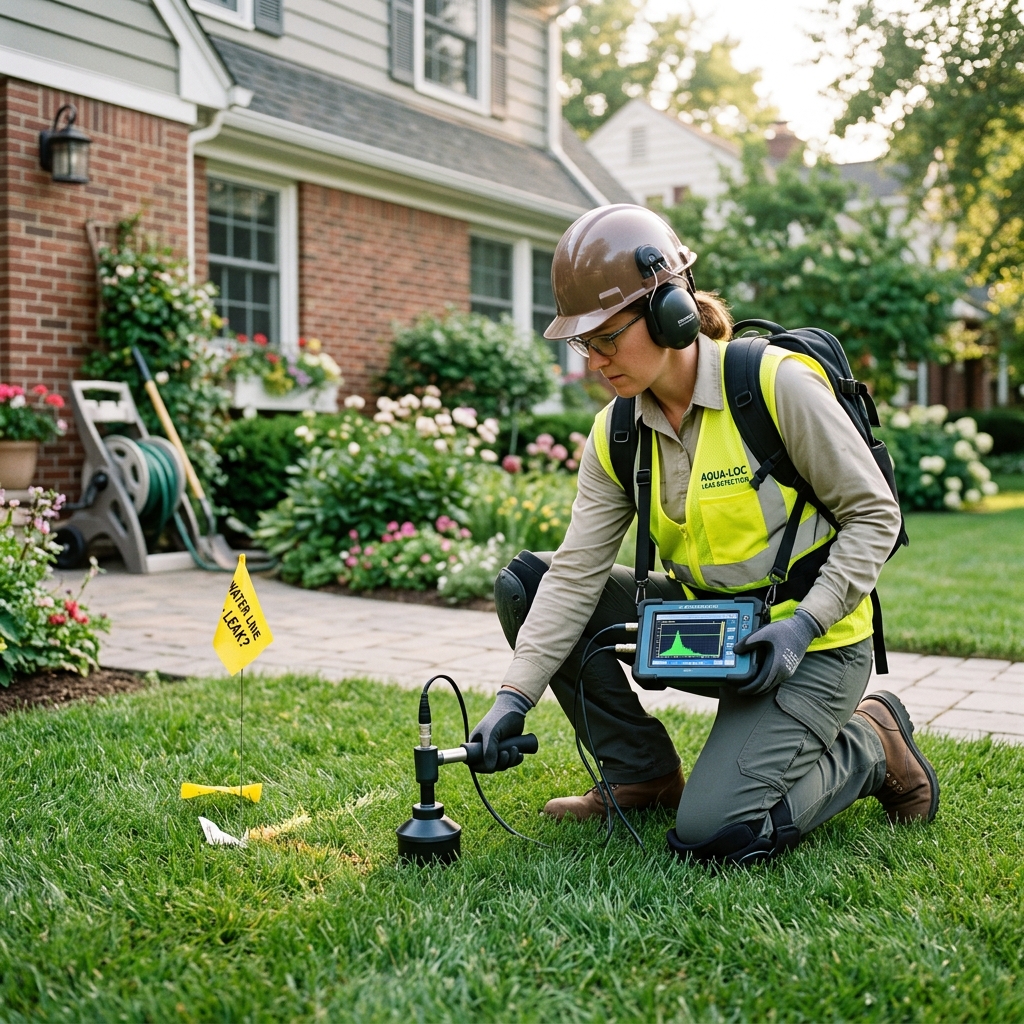
Distinguishing Building Leaks from Yard Service Line Failures
Homeowners across Goodyear master-planned communities—such as Palm Valley, PebbleCreek, Canyon Trails, and Estrella—often discover water issues when the City of Goodyear sends an alert regarding abnormally high water usage. While subterranean foundation leaks are a frequent cause, water lines traverse vertical stud bays, second-story ceiling spaces, and expansive front yard landscapes.
Accurately diagnosing the source of continuous water loss requires methodical pressure isolation. Our technicians test building plumbing separately from outdoor service lines, verifying whether the leak is beneath your foundation slab or located outdoors in your yard.
Common Hidden Water Line Leak Locations
In-Wall Supply Risers
Vertical copper pipes supplying showers, sink vanities, and laundry hookups can develop pinhole corrosion or joint leaks. Symptoms include peeling paint, bubbling drywall, and musty odors above floor level.
Exterior Yard Service Mains
The pressurized water pipe running from the city water meter box at the street curb into the house can fracture due to desert soil shifting, tree roots, or caliche rock friction.
Irrigation & Manifold Lines
Underground desert landscaping irrigation manifolds, anti-siphon valves, and high-pressure supply branches can crack silently, driving up water bills without indoor signs.
Non-Invasive Diagnostic Technology We Utilize
Speculative digging in yards or tearing open drywall creates expensive repairs. We utilize advanced instrumentation to confirm the exact location:
Electro-Acoustic Ground Microphones
Detects the ultrasonic frequency of pressurized water escaping through soil, sod, or gravel bedding along the outdoor yard pipe alignment.
Digital Dielectric Moisture Meters
Non-penetrating electromagnetic sensors scan interior drywall and cabinetry, measuring internal moisture percentages without poking holes.
Infrared FLIR Thermography
Maps subtle evaporation cooling trails behind walls and ceilings, identifying hidden water tracks behind showers and kitchen vanities.
Arizona Utility Regulations & 811 Excavation Notice
In Goodyear and throughout Arizona, property owners are responsible for maintenance and repair of the private water line from the city meter box into the residence. Before excavating any yard water line, Arizona law requires contacting Arizona 811 (call 811 or visit their portal) to mark underground electrical, gas, and telecommunications lines.
If your diagnostic test reveals the leak is situated beneath your concrete foundation slab rather than in the yard, review our dedicated slab leak detection page or return to our slab leak repair Goodyear AZ homepage.